The Rhetoric of Lethality.
What it signals, its use in history, and what it asks of the force if it continues.
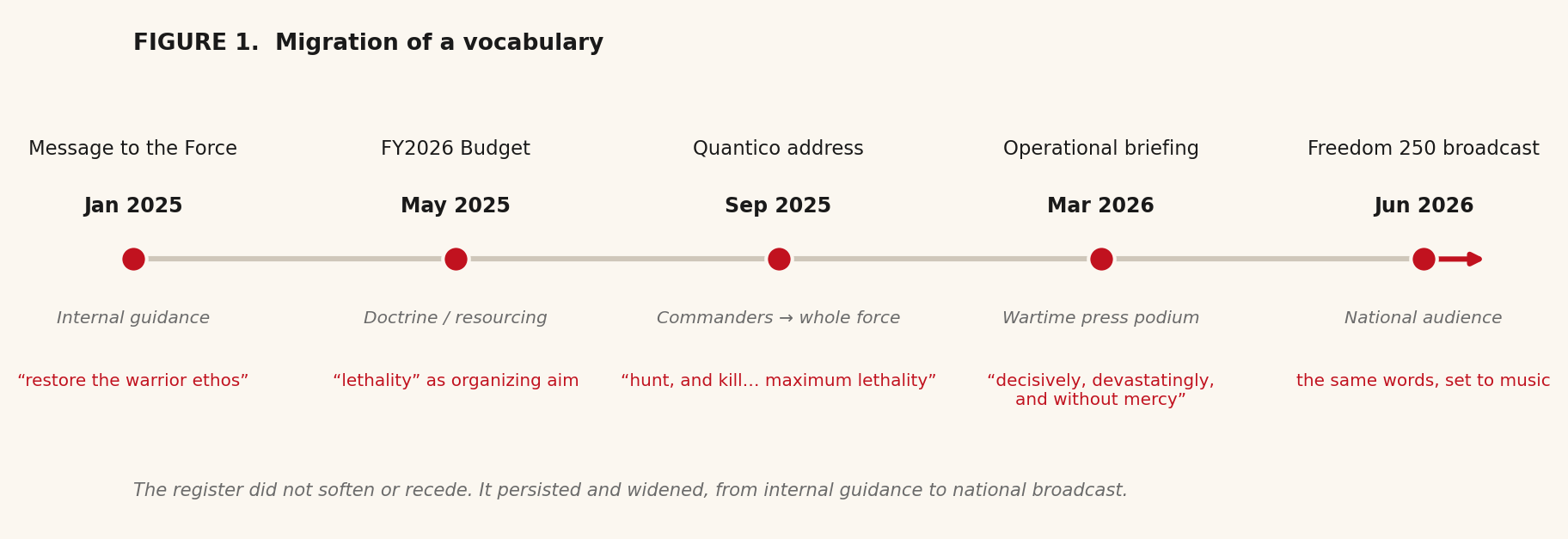
Over the past eighteen months, the vocabulary of and toward the American military has shifted. Maximum lethality. Hunt, and kill. Without mercy. None of it is wrong. They are warfighters, trained and capable of disciplined violence. But the language has narrowed to a single attribute, and the protector, the professional, the person who volunteered to serve has been edited out of the picture, for the force and for the nation.
This brief examines where that register has worked, where it has failed, and what it asks of the people who must live inside it. It does not assign motive. It witnesses a shift, and asks what history says such language produces.
Download the Full Brief (PDF) →
What this brief covers
Hard, martial language is not new, and it is not automatically a failure. It has built and steadied forces before. What has changed is the register's reach and its direction, and reading the pattern whole makes visible what no single speech does.
- Where it has worked. When the language was aimed inward, to steel the people carrying the cost, and stayed inside the law and the discipline that make a soldier different from a brawler.
- The measure. Leading from the rubble. The standard the American tradition already set for command language, and how the current register inverts it.
- The whole person and the part. What the clinical work on reintegration says about asking a force to live inside the activated self in peacetime.
- What it costs. The recruiting base, the family signal, and the person who carries it.
About this brief
GroundTruth Collective is an intelligence project driven by Corie Weathers, LPC. For readers of Military Culture Shift (Elva Resa, 2025), each GTC brief is the bite-sized companion to the book.
Write to corie@corieweathers.com. Responses shape what the next brief covers.